


Views: 0 Author: Site Editor Publish Time: 2026-11-24 Origin: Site


Picture this. You manage a bustling commercial greenhouse. Suddenly, a whitefly outbreak threatens your delicate crop. Or perhaps you just want a quiet dinner at home, only to fight a persistent, buzzing housefly. The moment you finally catch that nuisance brings undeniable relief. However, the hidden hero behind effective pest management is rarely the cardboard design of the trap. It is the underlying adhesive science. Catching a bug is not merely about providing the right bait. Fundamentally, it is about ensuring that once the pest lands, it absolutely cannot leave.
This brings us to the core of modern pest control technology: thermoplastic polymers. Recognized as an industry standard, this scientifically engineered material forms the backbone of physical pest management. In this guide, we will break down the empirical science of how insect traps function. We will explore why manufacturers and consumers alike prefer these solutions. Most importantly, we will highlight the critical specifications you need to look for when selecting the right bonding agent for your specific pest control requirements.
Key Takeaways
Thermoplastic adhesives provide the optimal balance of initial tack and long-term cohesion, ensuring captured insects cannot leverage their limbs to pull free.
Unlike traditional chemical pesticides, a specialized fly trap hot melt glue formulation is non-toxic, eco-friendly, and safe for environments shared with humans and pets.
Sustained effectiveness relies on chemical formulations engineered to resist UV light degradation, extreme temperature fluctuations, and high ambient moisture.
Choosing the correct adhesive profile is a critical variable. It allows users to target specific pests ranging from lightweight fruit flies to robust crawling insects like cockroaches.
The fundamental concept of sticky traps relies on a simple yet highly engineered mechanism: physical immobilization. In the pest control industry, these are often called glue boards or monitor cards. Rather than relying on chemical ingestion, these traps use a highly viscous surface to physically restrain the target pest. Before analyzing the adhesive itself, we must understand the biological mechanisms of the target.
Insects possess highly specialized appendages. Their feet often feature microscopic claws and adhesive pads called pulvilli. These structures evolved specifically to grip complex, inverted, or incredibly smooth surfaces. To defeat this evolutionary advantage, an insect trap must deploy an adhesive that neutralizes the insect's mobility the exact millisecond contact is made.
Visual and olfactory attractants play the initial role in pest management. Pheromone dispensers, specific color spectrums, and UV light bulbs lure the insect into the capture zone. Once the insect lands, the attractant's job is complete. An insect's survival instinct triggers immediate flight upon sensing a foreign surface. Therefore, the glue must possess specific rheological properties to instantly coat their legs and wings. If the adhesive is too rigid, the insect simply walks across it. If it lacks cohesive strength, the insect can tear its limbs free and escape.
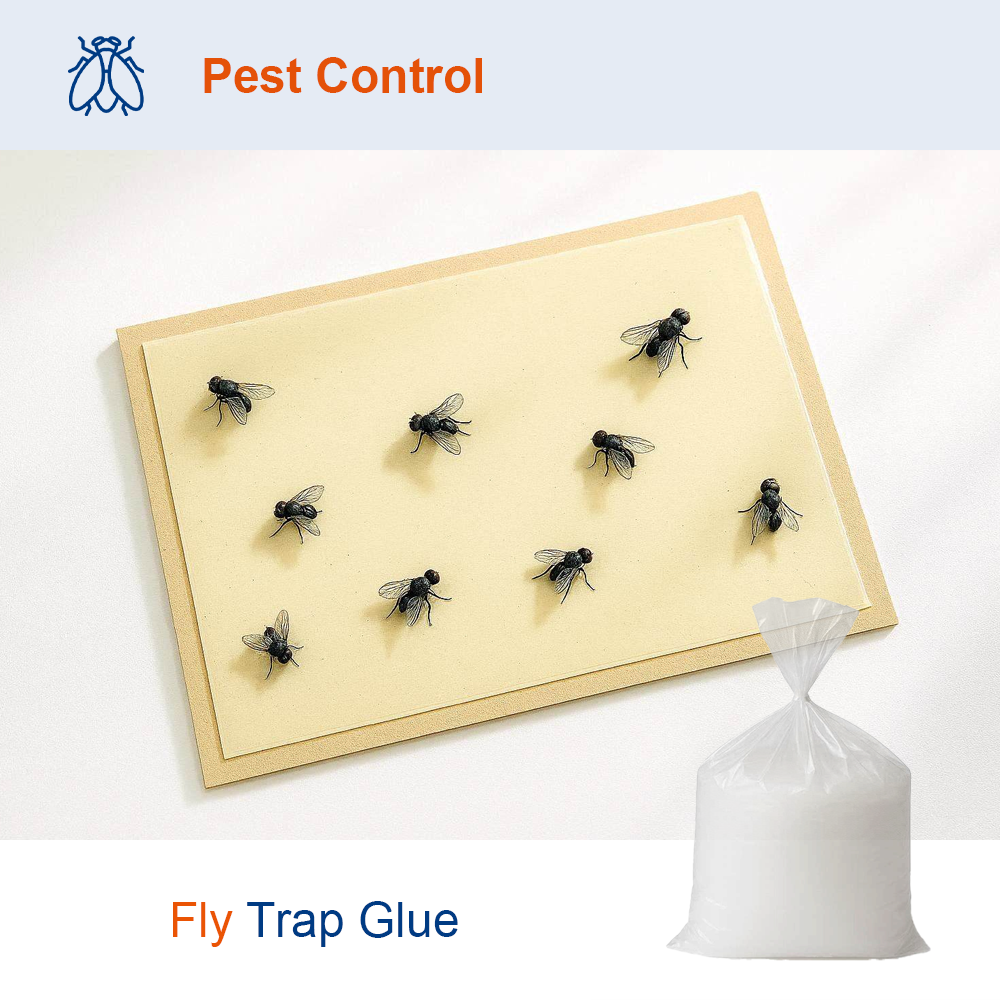
To understand why modern pest management relies heavily on specific adhesives, we must define the material. In industrial terms, hot melt glue is a thermoplastic adhesive. It is a polymer-based material that remains completely solid at room temperature. It becomes a viscous liquid when heated for application onto a trap's backing material, and it rapidly solidifies upon cooling. Unlike solvent-based glues, thermoplastic adhesives maintain their pressure-sensitive tackiness through their inherent chemical structure.
Currently, the global agricultural and pest control sectors are experiencing a massive shift toward integrated pest management. Regulatory bodies are increasingly cracking down on volatile organic compounds and chemical pesticides. Consequently, the demand for mechanical, non-toxic entrapment solutions has skyrocketed. The industry has heavily pivoted toward thermoplastic technology to meet these stringent environmental and safety standards. Because these adhesives operate through mechanical entrapment rather than chemical poisoning, they are inherently safer for food processing facilities, hospitals, and residential kitchens.
Furthermore, odorless properties are a strict operational requirement. Many advanced insect traps utilize synthesized pheromones to attract specific mating pairs. If an adhesive emits a strong chemical odor, it can mask the delicate pheromone plume. This actively repels the target insect and renders the trap useless. High-quality thermoplastic adhesives are virtually odorless, ensuring zero interference with the bait. They also offer an exceptionally long shelf life, providing continuous, passive pest monitoring for months.
In adhesive science, the term "tack" refers to the initial grab or the immediate stickiness of a material upon light contact. High initial tack is the single most critical performance metric for any pest control adhesive. When a fly lands on a trap, the downward force it exerts is incredibly minimal. The adhesive does not have the benefit of applied pressure to form a bond. Consequently, an effective hot melt adhesive for fly traps must possess aggressive surface energy to bond with the insect's exoskeleton instantly under virtually zero pressure.
This rapid capture process is governed by two physical properties: viscosity and wetting. Wetting is the ability of a liquid to maintain contact with a solid surface. Even though the glue feels solid to the human touch, on a microscopic level, a premium pest adhesive behaves as a highly viscous liquid. When the insect's microscopic leg hairs touch the surface, the glue flows around these tiny structures. The formulation must be fluid enough at ambient room temperature to achieve this wetting phase, yet cohesive enough that it does not tear apart.
The biological response of the trapped insect introduces the struggle factor. As the insect realizes it is restrained, it panics and attempts to pull away. This generates shear force. Here, the viscoelastic nature of the adhesive becomes vital. Instead of snapping or letting go, the adhesive stretches. It elongates into microscopic strings that wrap around the insect's body, wings, and legs. The more the insect thrashes, the more surface area comes into contact with the adhesive. This effectively neutralizes all movement through physics rather than chemistry.
To objectively evaluate trap adhesives, it is necessary to compare the industry standard against historical and alternative options. Empirical data consistently points to thermoplastic solutions as the superior choice for modern applications.
Feature | Solvent-Based Glues | Water-Based Adhesives | Thermoplastic Hot Melt |
|---|---|---|---|
Initial Tack | Very High | Moderate | Exceptionally High |
VOC Emissions | High (Strong Odor) | Low | Zero (Odorless) |
Moisture Resistance | Good | Poor (Emulsifies) | Excellent (Hydrophobic) |
Shelf Life | Short (Dries Out) | Moderate | Long-lasting (Months/Years) |
Historically, solvent-based adhesives were used due to their aggressive initial tack. However, they cure via the evaporation of chemical solvents, releasing strong odors that actively repel sensitive insect species. Water-based adhesives are environmentally friendly but fail under operational stress. In commercial greenhouses where humidity exceeds 85%, water-based glues absorb moisture, turn cloudy, and lose their tack entirely. Thermoplastic adhesives outperform these alternatives across all measurable metrics. They are 100% solid, highly weather-resistant, and maintain their unique sticky properties without releasing harmful emissions.
Not all thermoplastic adhesives are created equal. Formulations used in cardboard packaging will fail immediately if applied to an insect trap. As adhesive engineers, we design pest control glues as complex blends of polymers, tackifying resins, and plasticizers. They are engineered with specific performance features to withstand severe environmental stressors.
Precise Temperature Resistance: Pest control happens in extreme environments. If a trap is placed in a sun-baked agricultural field, the adhesive must not melt. Industrial-grade fly traps hot melt adhesive typically features a softening point between 75°C and 85°C. This ensures the glue will not liquefy and drip off the trap, creating a mess and losing its holding power. Conversely, it maintains an optimal working viscosity of around 5000 to 8000 cps at 160°C during the manufacturing coating process.
Advanced UV Resistance: Agricultural sticky rolls face intense, prolonged exposure to ultraviolet radiation. Standard polymers degrade rapidly under UV light, forming a dry crust on the surface. Premium formulations contain advanced UV stabilizers and antioxidants. These chemical additives absorb or deflect UV radiation, ensuring the adhesive remains tacky even after weeks of direct sunlight exposure.
Optical Clarity: The visual aspect of a trap is a highly researched attractant. The adhesive applied over brightly colored boards must remain optically clear. High-quality formulations present as a light yellow or completely transparent solid. If the glue oxidizes or clouds over time, it alters the wavelength of light reflecting off the board, which drastically reduces the catch rate.
Hydrophobic Properties: Insects live in dirty environments. Barns are filled with dust, and greenhouses are saturated with moisture. Advanced thermoplastic adhesives are highly hydrophobic, meaning they naturally repel water. Their surface tension is engineered so that a light coating of environmental dust does not completely neutralize the underlying tack.
The versatility of thermoplastic adhesive technology allows it to be adapted for a wide variety of form factors. Each application requires a slightly different rheological profile.
For residential and commercial fly control, thin ribbons or window decals are standard. These applications target lightweight flying insects like houseflies, fruit flies, and gnats. The adhesive used here must have an exceptionally high initial tack but a very low coat weight. The formulation is optimized to instantly wet the fly's delicate wings while maintaining enough shear resistance so gravity does not cause the glue to drip down a warm windowpane.
Crawling pests require a vastly different approach. Picture a cockroach desperately leveraging its spiky legs against the board. These pests have strong appendages and a hard, waxy exoskeleton that naturally resists adhesion. Traps designed for these pests utilize a much thicker application of adhesive with significantly higher cohesive strength. The glue must be deep enough for the insect's legs to sink into, preventing the pest from leveraging itself out.
In large-scale commercial farming, pest control is managed via massive rolls of sticky tape. These are unrolled along crop rows to protect against aphids, thrips, and whiteflies. The adhesive applied to these rolls must endure extreme outdoor weathering and massive temperature swings from day to night. These agricultural rolls represent the pinnacle of polymer engineering, balancing long-term outdoor durability with relentless tackiness.
Selecting the correct adhesive formulation is a data-driven process. It requires matching the polymer's physical properties to your specific operational environment and target pest. Here is a practical framework for making the right choice:
Step 1: Profile the Target Pest. The size, weight, and biological makeup of the insect dictate the required tack and viscosity. Fragile insects like fungus gnats require a very soft adhesive that grabs instantly upon the lightest touch. Robust crawling insects require a stiffer adhesive with high shear strength. Always align the adhesive's peel and shear testing data with the biological profile of the pest.
Step 2: Evaluate the Deployment Environment. Environmental profiling is crucial. A trap designed for a climate-controlled warehouse will fail in an outdoor orchard. Evaluate expected temperature ranges, humidity levels, and UV exposure. If placing traps in a commercial bakery near ovens, an adhesive with a high softening point is mandatory. In a humid greenhouse, prioritize hydrophobic properties.
Step 3: Assess Manufacturing Machinability. For B2B buyers and trap manufacturers, machinability is just as important as pest-catching ability. The adhesive must melt cleanly and apply smoothly through automated slot-die or spray coating machinery. Avoid formulations that exhibit stringing or those that degrade and char inside the melting tank, as these issues cause costly production downtime.
As global agricultural practices shift toward sustainable models, pest management materials are undergoing rigorous scientific advancement. Industry trends indicate a massive pivot toward data-driven pest management and eco-conscious material sourcing. The future of trap adhesives lies in reducing environmental impact without sacrificing empirical effectiveness.
Material scientists are currently pioneering bio-based adhesives utilizing polymers derived from renewable resources, such as polylactic acid or soy-based resins. The ultimate goal is to create a fully compostable sticky trap. In commercial agriculture, farmers could theoretically take a used cardboard trap full of insects and compost it directly into the soil. This would eliminate the massive plastic waste associated with current disposal methods.
Additionally, the intersection of adhesive science and artificial intelligence is creating the next generation of pest monitoring. Modern smart traps utilize integrated high-resolution cameras and AI image recognition software to automatically count and identify trapped insects. For these optical sensors to work accurately, the insect must be held perfectly still, and the adhesive must remain flawlessly transparent. The next generation of adhesives is being formulated specifically for extreme optical clarity and absolute immobilization, bridging the gap between polymer chemistry and digital agriculture.
No. One of the main benefits of using thermoplastic adhesives in insect traps is that they are fundamentally non-toxic. They rely entirely on physical capture rather than chemical poisons or insecticides. This makes them exceptionally safe for deployment in homes with children, pets, and sensitive food preparation areas.
High-quality formulations can remain sticky for several months to over a year, depending heavily on the deployment environment. While the glue itself does not dry out or evaporate, the accumulation of heavy dust, floating debris, and extreme UV exposure can eventually coat the surface and reduce its physical effectiveness over time.
Standard craft glue might, but specialized pest control adhesives are formulated with precise softening points. This specific temperature resistance ensures the adhesive remains highly tacky without transitioning into a liquid state. It prevents dripping even in hot greenhouses or under direct, intense sunlight.
If the correct formulation is matched to the target insect, escape is virtually impossible. The empirical science of the adhesive's tack and viscosity ensures that the more an insect struggles and thrashes, the more thoroughly it becomes embedded and trapped in the adhesive matrix.
Because thermoplastic adhesives used in pest control are oil-soluble, they can be easily and safely removed from skin or hard surfaces. Applying common household oils, such as vegetable oil, baby oil, or mineral spirits, will rapidly break down the adhesive bond. This allows for quick and painless cleanup.
Industrial-grade insect trap adhesives are engineered to perform across a wide temperature spectrum. Typically, premium formulations maintain optimal tackiness between -10°C and 50°C (14°F to 122°F). However, if you are operating in extreme cold storage or near high-heat industrial ovens, you must request a custom formulation tailored to those specific thermal limits.
Standard polymers will degrade, harden, and lose their stickiness when exposed to prolonged UV radiation from sunlight. However, high-quality agricultural sticky trap adhesives are formulated with advanced UV stabilizers and antioxidants. These additives protect the polymer chains, allowing the trap to remain highly effective outdoors for weeks or even months without crusting over.
Sticky traps rely entirely on advanced adhesive science. The true power of a trap does not lie in the cardboard or the plastic casing; it lies in the glue. High-quality adhesives capture pests safely and effectively, offering a scientifically sound solution that protects both crops and homes without harsh chemicals. Whether you are a homeowner clearing out a kitchen or a commercial farmer protecting acres of produce, your success depends on the right formulation. If you are looking to upgrade your pest control manufacturing or seeking reliable agricultural solutions, exploring premium products like Cheshire fly trap hot melt glue is the most effective and safe choice. Protect your environment with confidence, because effective pest control always starts with better science.


